
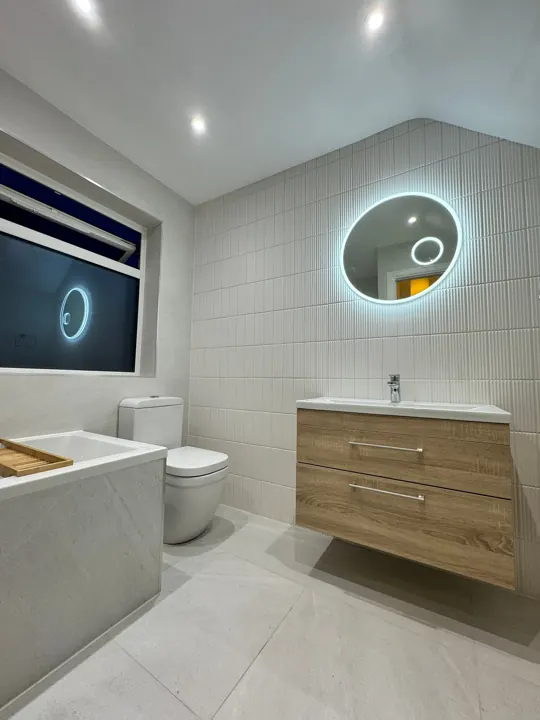
A beautiful bathroom can be undermined by one expensive surprise behind a wall. Knowing how to budget bathroom refurbishment work means looking beyond the basin, taps, and tiles. You must account for plumbing, electrics, waterproofing, and skilled installation. These elements make the finished room reliable for years to come.
For homeowners planning a substantial upgrade, the most useful budget is not a single figure pulled from a showroom display. It is a clear project allowance that separates essential technical work from design choices. This approach identifies unknowns early and leaves sensible room for decisions made during the build.
Start with the Bathroom You Need, Not Just the Look You Want
Before pricing products, decide what the refurbishment must achieve. Is the existing layout frustrating during busy family times? Are there signs of failing sealant, poor extraction, or ageing pipework? Do you want a walk-in shower, a freestanding bath, better storage, or underfloor heating?
These answers establish the scope. Replacing like for like is generally more straightforward than moving a WC, shower, or basin. Moving drainage can involve lifting floors, altering pipe runs, and checking that falls are adequate. Changing the position of electrical points, installing recessed storage, or converting a bathroom into a wet room also adds labour and technical requirements.
A good brief distinguishes between non-negotiables and preferences. For example, a family may consider improved ventilation, a thermostatic shower, and concealed storage essential. Meanwhile, a feature wall finish or a specific brassware range may be a preference. This clarity makes it easier to protect the project's most important parts if costs need adjusting.
Build Your Bathroom Refurbishment Budget in Sections
A detailed proposal should show where the money is going. This gives you more control than a headline estimate and lets you compare quotations on a like-for-like basis. A complete refurbishment commonly includes the following areas:
Design, site survey, space planning, and project management
Removal, waste disposal, and preparation of the existing room
Plumbing, drainage alterations, heating, and electrical work
Wall and floor preparation, tanking or waterproofing, and tiling
Bathroom furniture, sanitaryware, brassware, showering, and lighting
Fitting, finishing, testing, cleaning, and handover
The proportions will vary. A compact cloakroom with limited tiling may spend more of its budget on fittings. In contrast, a large bathroom with a wet-room floor, extensive porcelain tiles, and bespoke joinery will carry more preparation and installation costs.
Do not overlook the work that disappears from view. Correct pipework, sound electrical installation, suitable ventilation, and properly applied tanking are not glamorous line items. However, they protect the room from leaks, mould, and costly remedial work. In a shower enclosure or wet room, waterproofing should be treated as a core part of the specification, not an optional extra.
Allow Separately for Products and Labour
It is helpful to set a product allowance for visible selections such as the bath, WC, basin, vanity unit, taps, shower valve, screen, tiles, mirror, and accessories. This gives you flexibility during design without leaving the overall budget undefined.
However, product prices are only one part of the equation. A premium large-format tile may look excellent, but it can require more careful handling, precise wall preparation, and additional cutting. Wall-hung furniture can create a refined, spacious look, yet it needs suitable fixing grounds and may require repositioning of pipework. Neither is a reason to avoid the choice, but both should be costed honestly.
Labour should cover the full sequence rather than only the final fitting. A room may need stripping back, floor levelling, first-fix plumbing and electrics, boarding, waterproofing, tiling, second-fix installation, and decorating or finishing. When one accountable team manages these stages, the programme is usually easier to coordinate, and responsibility for the completed room is clearer.
Factor in Layout Changes Before Committing to Them
The fastest way to change a bathroom budget is to change the layout. This can still be money well spent if it improves daily use, creates better storage, or turns an awkward room into a practical family bathroom. The key is to assess the hidden implications before ordering fixtures.
A relocated shower may require new hot and cold supplies, waste pipe alterations, and floor access. A wall-hung WC needs a frame and often a false wall. A new radiator position may mean altering heating pipework, while electric underfloor heating needs an appropriate electrical supply and controls. If you are considering a boiler replacement or wider heating improvements at the same time, discuss them early so the work can be planned as one coordinated project.
Keeping the main services broadly where they are can preserve budget for finishes. Conversely, where an older property has poor drainage, inadequate pressure, or visibly tired pipework, retaining the old arrangement simply because it appears cheaper may create false economy. The right decision depends on the condition of the property as much as the proposed design.
Keep a Contingency for What the Survey Cannot See
Even a careful site visit cannot reveal every condition behind tiled walls or beneath flooring. Water damage, uneven substrates, obsolete pipework, damaged joists, and non-compliant electrical work occasionally become apparent only once the room is opened up.
For this reason, include a contingency rather than spending every pound on finishes. The appropriate amount depends on the age and condition of the property and how much is being altered. A straightforward refresh in a newer home may need a smaller allowance than a full strip-out of an older bathroom with uncertain services.
A contingency is not a licence for vague pricing. Your contractor should identify foreseeable work in the original scope and explain any genuine variations before proceeding. The contingency is there to deal with discoveries, not to compensate for an incomplete proposal.
Compare Quotations by Scope, Not by the Lowest Total
When reviewing bathroom refurbishment quotations, check exactly what is included. One figure may appear lower because it excludes removal, waste, electrical certification, tile adhesive and grout, waterproofing, painting, delivery charges, or final silicone work. Another may include supply allowances that are too modest for the products you have in mind.
Ask whether the proposal confirms the tile coverage, the extent of wall preparation, the tanking system, the number of electrical points, and who supplies each item. It should also state any assumptions, such as retaining existing drainage routes or using standard-size furniture. Clear exclusions are useful too, because they prevent assumptions from becoming disputes later.
In Bromley, Sevenoaks and surrounding Kent homes, property age and construction can vary considerably from one street to the next. A thorough survey and a written scope are therefore more valuable than a quick estimate based solely on room dimensions or photographs.
Spend Where It Protects Everyday Performance
If the budget must be prioritised, protect the elements that are difficult or disruptive to alter later: plumbing, drainage, waterproofing, ventilation, electrics, and tile preparation. These works determine whether the room performs properly long after the styling choices have been forgotten.
There can then be sensible flexibility in finishes. For instance, using a statement tile in the shower area with a complementary, more economical tile elsewhere can retain impact. A well-made standard vanity may offer better value than fully bespoke cabinetry in a small room. Meanwhile, custom joinery may be worthwhile where an unusual alcove would otherwise waste valuable storage space.
Avoid choosing solely based on the initial purchase price. A quality shower valve, durable furniture carcass, and reliable extractor can offer better long-term value than cheaper alternatives that need replacing prematurely. Equally, expensive does not automatically mean suitable. The product must fit the room, the water system, and the way you use the bathroom.
Control Changes Once Work Begins
Late changes are one of the most common causes of pressure on a renovation budget. They may be unavoidable, especially when hidden conditions are discovered. However, design changes after the first fix can affect several trades at once.
Finalise key selections before work starts wherever possible. Confirm tile sizes and layouts, furniture dimensions, brassware finishes, mirror lighting, and accessory positions. A detailed design allows pipework and electrical points to be set out accurately before walls are closed and surfaces are tiled.
If you do make a change, ask for its cost and programme effect in writing before approving it. This keeps decisions transparent and avoids the uncertainty that comes from informal conversations on site.
Plan for the Whole Project, Not Only Installation Days
A professionally managed bathroom refurbishment often takes around 10 to 14 working days. However, complex layouts, extensive drying times, bespoke products, or wider building work can extend this. Your budget should account for practical disruption too, particularly if the property has only one bathroom.
Consider whether you need temporary washing arrangements, whether deliveries can be stored securely, and whether lead times could affect your preferred start date. Ordering every item too early can create storage issues, while ordering late can delay the programme. A coordinated schedule helps balance both.
The best bathroom budget gives you clarity rather than false certainty. Set a realistic scope, choose products that suit the room, retain a sensible contingency, and insist on a proposal that explains the technical work as clearly as the visible finish. With that foundation in place, each design decision can feel like an investment in a bathroom built to last.
Conclusion
In summary, budgeting for a bathroom refurbishment requires careful planning and consideration. By understanding the essential elements, separating costs, and anticipating potential issues, you can create a space that meets your needs and stands the test of time. Remember, a well-thought-out budget is the key to a successful renovation.
Planning your own bathroom renovation? Discuss the layout, installation and agreed quotation with The Bathroom Project. View our services or send an enquiry. We’ll reply by email or phone to answer questions and agree a suitable next step.
Planning your own bathroom?
Explore your ideas in 7 picture-led questions, add optional photos of your current room and enquire about a free home consultation. Skip anything you are unsure about.
Plan your bathroom